Squishy Toys: The Complete Guide to Types and Feel
Squishy toys are squeezable objects designed around a sensory response: softness, resistance, sound, rebound, visual movement, or some combination of those traits. The useful way to choose one is not by shape alone, but by asking what is inside, how the shell behaves, what the squeeze sounds like, and how quickly the toy returns to form.
This guide maps the category from slow-rise foam and gel-filled stress balls to crunchy, slushy, moldable, plush, and collectible dumpling designs. It also explains what product descriptions can prove, what buyer language really means, and which warning signs deserve a closer look.
What Counts as a Squishy Toy?
“Squishy” is a broad shopping and community term, not one precise material specification. It can describe a painted polyurethane foam cake, a thermoplastic-rubber ball filled with gel, a dough-like shape that holds a dent, a fuzzy squeeze ball, or a plush object with soft stuffing.
That breadth is why two products called “soft squishies” can feel completely different. One may collapse with almost no effort, another may push back like a firm therapy ball, and a third may flow between the fingers without visibly trapping air.
Shape also does not identify the construction. A dumpling squishy might be slow-rise foam, a sealed filled toy, a plush pillow, or a blind-box collectible; “dumpling” tells you the visual theme, not the filling.
Squishy toys, stress balls, and fidget toys
These categories overlap, but they are not identical. A stress ball is usually made for repeated squeezing, while a collectible squishy may prioritize a detailed finish, a slow visual rise, or a surprise-box experience.
“Fidget toy” is broader still. It includes clickers, spinners, putty, sliders, and many other products that do not compress at all.
Why shoppers use sensory words instead of material names
Most buyers cannot see the internal formula, and sellers do not always disclose it. People therefore search with experiential words such as “doughy,” “moldable,” “buttery,” “crunchy,” “quiet,” “slow rise,” “snap back,” or “holds its shape.”
These words are useful for describing a result, but they should not be treated as laboratory material labels. “Coconut-oil feel,” for example, may describe a smooth flowing sensation without proving that coconut oil is inside.
The Five-Part Sensory Map
A reliable comparison uses five axes: shape, resistance, rebound, sound, and risk. This prevents a popular character or package from hiding the traits that determine whether someone will actually enjoy the toy.
1. Shape and form
Common forms include balls, cubes, food, fruit, animals, characters, dumplings, buns, and pillows. Rounded shapes often suit full-palm squeezing, while cubes and food shapes can create edges, folds, or seams that change the squeeze.
Collectors may choose primarily by theme, color, rarity, or display appeal. Sensory buyers usually benefit from treating shape as the first filter, not the final decision.
2. Resistance
Resistance describes how much force the toy pushes back with. A soft-collapse toy flattens easily, a doughy toy invites kneading, and a firm-resistant toy feels more substantial in the hand.
Words such as “hard,” “firm,” and “dense” are relative. Hand size, grip strength, temperature, and the amount of filling can all change the experience.
3. Rebound
Rebound is the return behavior after pressure is released. Fast-rebound toys spring back quickly, slow-rise toys recover gradually, and moldable or near-zero-rebound products may hold a flattened shape until they are reshaped.
A slow rise is not automatically softer, and a fast return is not automatically firmer. Resistance and rebound are separate properties and should be described separately.
4. Sound
Quiet squishies produce little more than shell movement. Slushy styles may sound wet or granular, crunchy styles may crackle or shift, and bead-filled toys can create sharper internal movement.
Sound varies with recording distance and microphone processing. A social video can demonstrate the character of a sound, but it cannot guarantee the exact volume a buyer will hear.
5. Risk and maintenance
Construction changes the failure mode. Painted foam can crack or peel, sealed filled toys can split or leak, fuzzy surfaces can collect lint, and plush toys can retain moisture if soaked.
Heat is a serious warning sign across the category. The U.S. Consumer Product Safety Commission advises consumers never to microwave or heat squishy toys and notes that some contain water beads, gels, liquids, powders, or sand.
Follow the package instructions and stop using a damaged item. See the CPSC squishy toy safety alert.
Major Types of Squishy Toys
Slow-rise foam squishies
Slow-rise foam squishies compress and then gradually return to their original form. They are often shaped and painted as food, animals, or characters, which makes them popular for visual reveals and collection displays.
The main tradeoff is surface wear. Paint, printed details, and coatings may crease or peel before the foam itself stops working, especially around high-compression folds.
Fast-rebound squeeze toys
Fast-rebound toys return almost immediately and suit rhythmic squeezing. They can feel lively and responsive, but buyers seeking a long visual rise may find them too quick.
Check the description for actual dimensions and resistance. A small ball can feel firmer than a larger version made from a similar shell because the grip and fill distribution differ.
Doughy and moldable squishies
Doughy products are valued for kneading, flattening, folding, and shape holding. Community phrases such as “flour-like,” “maltose feel,” “no rebound,” and “moldable” often point toward this family, but they do not prove a particular ingredient.
This style can be especially satisfying for people who want a slow, substantial hand movement instead of a bouncing squeeze. Seams and plugs deserve attention because users may pull or fold the product more aggressively.
Gel, liquid, and fluid-filled squishies
These toys create visible or tactile flow as the filling moves away from pressure. Clear shells may reveal glitter, beads, color effects, or liquid movement, while opaque shells can create a smooth “no air pocket” sensation.
Do not infer the formula from appearance. If the filling is not disclosed, describe the observable feel and movement rather than claiming it contains gel, oil, maltose, or another named substance.
Slushy, sandy, and granular-feel squishies
Slushy or sandy products combine flow with fine internal texture. They may sound softly gritty, wet, or snow-like and are especially suited to close-microphone ASMR demonstrations.
Sound alone does not reveal durability. Look for clear care instructions and reviews that mention seam integrity, leaking, residue, or changes after repeated use.
Crunchy and bead-filled squishies
Crunchy toys produce texture and sound through beads, blocks, shells, or other moving components. Some feel firm and structured, while others have a soft outer layer with a more active center.
“Crunchy” describes the sensory effect, not one universal construction. Product pages should explain the exterior, disclosed filling, and intended squeeze instead of relying on the adjective alone.
Wax-coated and crispy squishies
Wax-coated or crispy squishies use a surface layer that cracks during the first squeezes. The break pattern and sound can be dramatic on video, but that first-crack effect may not fully repeat after the coating is broken.
Buyers should distinguish a deliberately breakable coating from accidental paint damage. A seller should also disclose whether the surface is meant to shed and how the toy should be handled afterward.
Fuzzy, plush, and fabric-covered squeeze toys
Fuzzy and plush products add a soft surface that changes both grip and appearance. They may feel warmer and quieter than smooth rubber styles, although fibers can collect dust and may not tolerate soaking.
Some are true plush toys with stuffing, while others are squeeze balls with flocked or fabric-like exteriors. Read the construction details rather than assuming every fuzzy product can be washed like a stuffed animal.
Blind boxes and collectible squishies
Blind boxes add rarity, color variants, and the possibility of a chase design. The sensory toy becomes part squeeze object, part reveal, part collection hunt.
Before buying, check whether the color is random, whether duplicates are possible, and whether the listing promises a specific style. High social visibility and store-hunting videos show attention, not predictable resale value or market demand.
How to Choose the Right Squishy
Start with the action you want to repeat. If you want to watch a shape slowly rebuild, choose slow-rise foam; if you want continuous hand motion, consider fast rebound; if you want kneading and shape holding, look for doughy or moldable language.
Next, decide whether sound is a benefit or a distraction. Crunchy and slushy toys can be satisfying in private but unsuitable for a classroom, shared office, meeting, or quiet commute.
- For quiet use: look for soft foam, plush, or explicitly quiet designs.
- For ASMR: compare slushy, sandy, crunchy, and coating-crack demonstrations.
- For strong hand resistance: check size, shell, fill level, and firm-resistance descriptions.
- For visual collecting: inspect paint, color, rarity rules, packaging, and display durability.
- For gifts: verify age grading, care needs, random-variant terms, and recipient preferences.
Then read the negative reviews, not only the star average. Search within reviews for smell, sticky, oily, seam, plug, leak, tear, paint, fake, size, and “not as pictured.”
One Texture-First Product to Explore
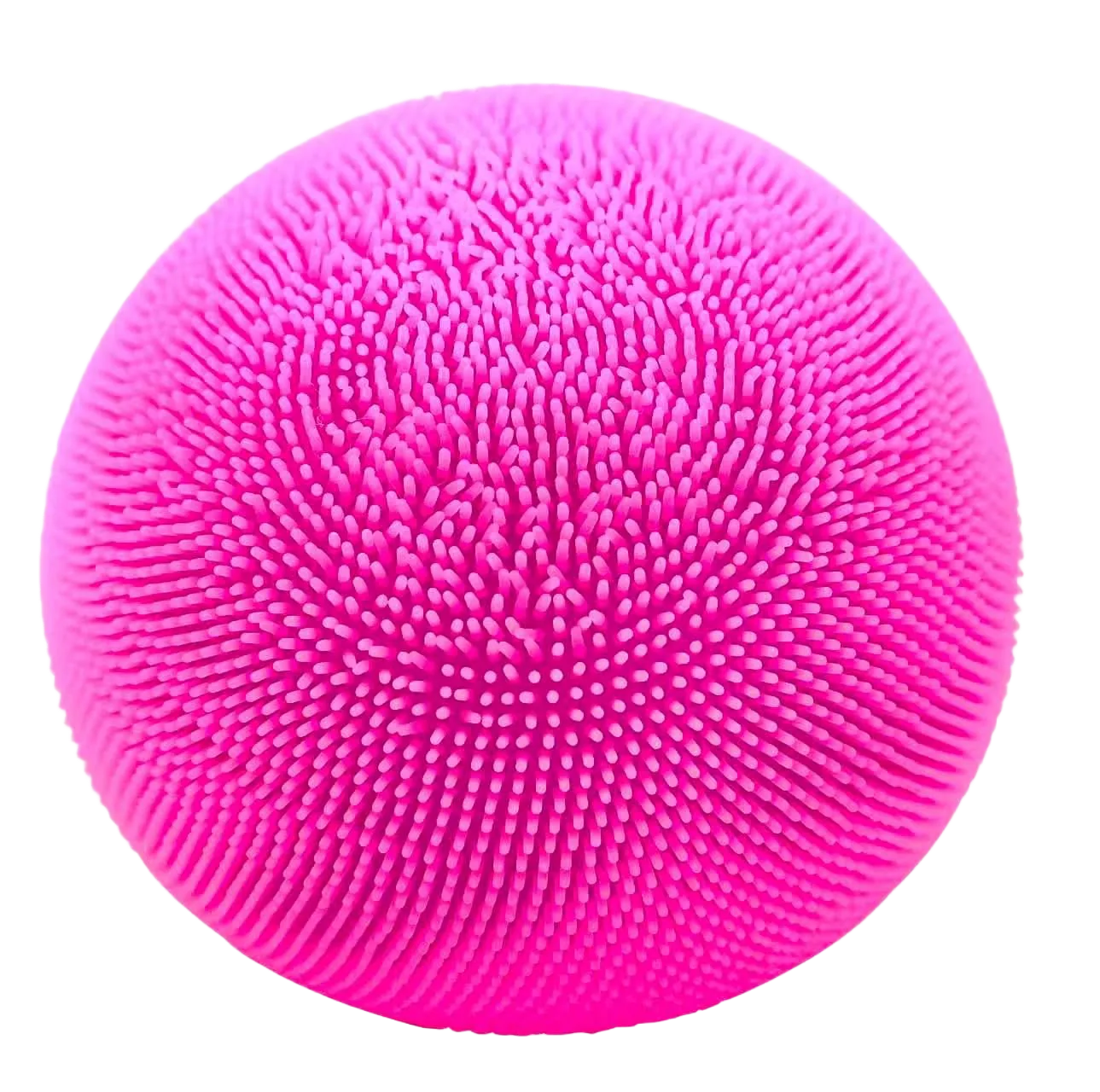
This is a useful example of choosing by surface feel rather than by a viral character or material buzzword. Review the current product page for the exact variant and care details before ordering.
Quality, Care, and Safety
Inspect the toy before the first squeeze
Check the seam, plug, surface coating, and packaging information before heavy use. An unusually strong chemical odor, oily or sticky surface, missing manufacturer information, or visible damage should pause use until the product can be evaluated or returned.
For a sealed filled toy, use a gentle first squeeze over an easy-to-clean surface. If the shell opens, leaks, or develops a new bulge at a seam, stop using it.
Clean according to construction
Editorial note: The cleaning and stickiness guidance in this section is TopToyFun’s cautious editorial starting point, compiled from general toy-care practice and public safety guidance rather than a per-brand chemical analysis or lab test. It does not replace the specific manufacturer’s own care instructions.
There is no universal cleaning method for every squishy. Some rubber-shelled products can be wiped or gently washed, painted foam often needs a light surface wipe, and plush designs may require spot cleaning.
Never assume that a viral cleaning hack is safe for your product. Follow the manufacturer’s instructions and avoid heat, solvents, aggressive scrubbing, or prolonged soaking unless the label explicitly permits them.
Separate safety facts from marketing language
Terms such as “non-toxic,” “food-grade,” “therapy,” and “child-safe” require reliable support. A soft feel, sweet shape, or clean-looking package is not evidence for any of those claims.
Age grading, small parts, water-bead warnings, latex information, and manufacturer identification matter more than vague reassurance. The CPSC Toy Safety Center provides current U.S. consumer guidance and recall resources.
How TopToyFun Uses Evidence
We separate observable product details from brand claims, community reports, and our analysis. A disclosed material on a manufacturer page can be reported as a brand claim; a Reddit complaint is a real user report but is not proof that every unit has the same issue.
We also avoid treating a single viral post, cumulative sold label, or local stockout as a measure of the entire market. Stronger signals repeat across independent creators, buyer discussions, retailers, and time.
Frequently Asked Questions
Q: What are squishy toys made of?
There is no single material. Common constructions include polyurethane foam, thermoplastic-rubber shells, plush fabric with stuffing, and sealed shells with brand-disclosed gels, liquids, powders, beads, or other fillings.
Q: What is the difference between slow rise and soft?
Softness describes resistance when you press the toy, while slow rise describes how long it takes to return after release. A toy can be soft and fast, firm and slow, or any combination between those extremes.
Q: Are crunchy squishies always bead-filled?
No. “Crunchy” describes the effect and can come from beads, blocks, granules, a cracking surface layer, or another disclosed structure.
Q: Why does my squishy feel sticky?
Possible causes include surface wear, residue, oil or plasticizer migration from the filling toward the shell (a phenomenon reported for some rubber-like toys, though TopToyFun has not lab-confirmed it for any specific product), heat exposure, or an incompatible cleaning product. Stop using it if the stickiness is new, oily, paired with a strong odor, or associated with damage.
Q: Can I microwave a squishy to make it softer?
No. Do not microwave, boil, or deliberately heat a squishy toy; heat can create burn and rupture hazards.
Q: How can I tell which squishy will feel best online?
Compare resistance, rebound, sound, size, shell, disclosed filling, and care instructions. Product videos and detailed reviews are more informative when they show a complete squeeze-and-release cycle without heavy editing or promise an identical result for every unit.
Informational notice: This guide is educational and does not replace manufacturer instructions, age grading, product testing, recall information, or professional medical advice. Product formulas and listings can change, so verify the current package and seller information before purchase or use.