Slushy vs Crunchy Squishies: Which Texture Fits You?
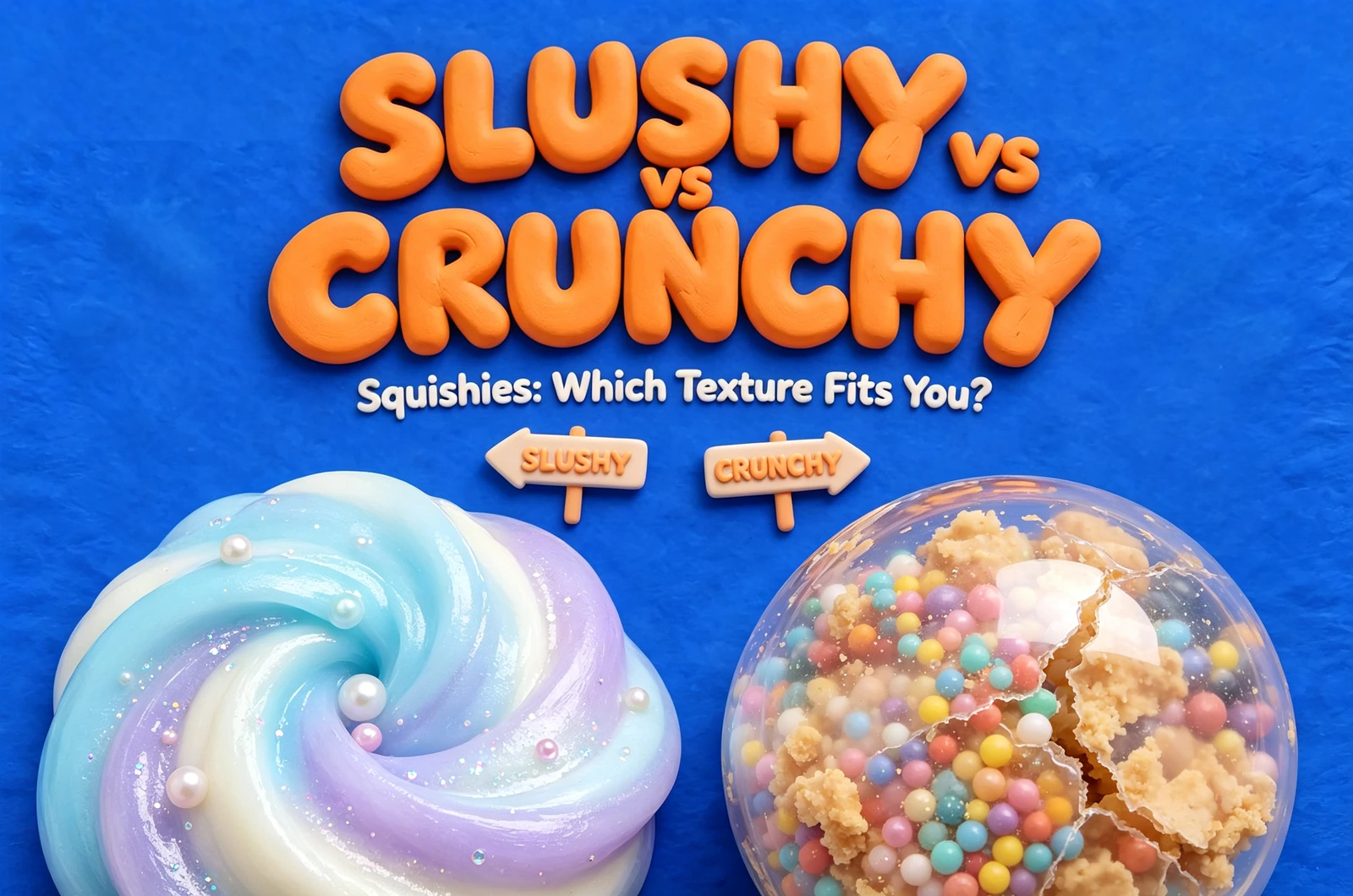
Quick answer: choose a slushy squishy if you want flowing, gritty movement that can feel soft or moldable. Choose a crunchy squishy if you want firmer resistance and distinct internal pieces that press, shift, or rub during a squeeze. Neither label is standardized, so compare the exact shell, filling, size, and demonstration before you buy.
This comparison focuses on the experience in your hand: movement, sound, resistance, and what happens after release. It does not identify an undisclosed filling from appearance, promise that every product in a category behaves the same way, or replace the manufacturer’s age, care, and safety information.
Comparison scope, not a laboratory test
This guide compares seller-stated product construction with observable movement, sound, resistance, and rebound cues. The examples help show what to check in a listing; they do not prove that every slushy or crunchy squishy uses the same filling, performs the same way, or meets an unstated certification.
Slushy and crunchy squishies at a glance
| Feature | Slushy squishy | Crunchy squishy |
|---|---|---|
| Typical movement | Flowing movement with a fine, gritty, sandy, or snow-like sensation | Distinct beads, blocks, or other structures shifting against one another |
| Typical resistance | Often pliable or moldable, but it can vary by shell and fill level | Often firmer and more resistant, but particle size and construction matter |
| Typical sound | Slush, soft scrape, squelch, or fine granular sound | Crunch, crackle, pop, or a stronger textured sound |
| Shape behavior | May flatten, flow, and hold a temporary shape | May resist compression or reshape unevenly as pieces move |
| Best first check | Watch whether the filling flows and whether the toy contains air pockets | Look for the size and type of the internal structures and listen at normal volume |
These are comparison cues, not category guarantees. A soft shell can make a crunchy filling easier to compress, while a thick shell can make a slushy filling feel more resistant. Fill level, dimensions, temperature, squeeze depth, and recording setup can all change the impression.
How the two textures feel
Slushy movement is continuous but grainy
A slushy squishy usually combines flow with fine internal texture. As the hand closes, the contents can move away from the fingers while the smaller particles create a subtle gritty or snow-like sensation. Some products flatten easily and invite slow folding or kneading; others feel denser because the shell or fill offers more resistance.
Words such as “slushy,” “sandy,” and “icy” describe an experience, not a verified ingredient list. A video cannot prove that actual sand, snow, gel, or a particular chemical material is inside. If composition matters, use the seller’s specific disclosure and ask for clarification when it is incomplete.
Crunchy movement comes from more distinct structures
A crunchy squishy usually makes its internal pieces easier to notice. Fine beads may feel bubbly, while larger blocks can create firmer pressure points and a more geometric squeeze. Mixed inclusions can produce irregular resistance, so one side of the toy may compress differently from another.
“Crunchy” also does not name one standardized construction. It can refer to beads, blocks, a surface coating, trapped air, or another moving structure. Read the listing closely enough to know which experience the seller is describing.
Resistance is the deciding factor for many hands
If you prefer slow kneading and shape manipulation, a pliable slushy style may be the easier starting point. If you want a more noticeable pushback and a textured squeeze, a firm crunchy style may be more satisfying. Those are preference matches, not performance rankings.
Hand size, grip strength, and sensitivity differ. Dimensions and a full-hand demonstration are more useful than a close-up that makes every product appear large and easy to compress. Stop if squeezing causes pain or discomfort; a sensory toy should not be treated as hand therapy or medical equipment unless it is actually designed and supported for that use.
How the sounds differ
Slushy products often produce a soft wet, snowy, sandy, or scraping sound as fine material moves through the shell. Crunchy products are more likely to produce individual crackles, pops, or a layered crunch as larger pieces press and shift.
Recording technique can exaggerate both. A close microphone, quiet room, boosted volume, or repeated edit can make a subtle product sound dramatic. Before buying for ASMR, look for at least one unedited squeeze at ordinary room distance. Check whether the creator shows the same toy for several full cycles rather than cutting to a different take.
Sound can also come from the exterior. Fingers moving over a tacky shell, air escaping near a plug, packaging, or a table surface may be louder than the filling itself. A useful demonstration keeps the hands and product visible while the sound is recorded.
Rebound and shape behavior
Texture and rebound are separate dimensions. A slushy squishy may stay flattened until it is worked back into shape, relax slowly, or return quickly because its shell pulls it back. A crunchy squishy may resist the first squeeze yet recover quickly after release, or its internal pieces may need redistribution.
Do not infer rebound from one still image. Look for an untouched shape, a full squeeze, a held squeeze, release, complete recovery, and a second squeeze. That sequence reveals more than an edited loop that ends before the product finishes moving.
For a broader explanation of these dimensions, use our guide to squishy texture, sound, and rebound. It explains why words such as soft, slushy, crunchy, and slow rise should not be treated as interchangeable.
How to judge listings and videos
Confirm the exact product
Match the shape, color, size, pack count, and named construction. A social video may show a similar-looking toy rather than the exact item in the product listing. If the seller offers several variants, confirm that the demonstration belongs to the one you plan to choose.
Watch a complete squeeze cycle
A useful video shows the starting shape, hand pressure, full compression, release, and recovery without hiding the transitions. For crunchy products, listen for whether the sound continues after repeated use. For slushy products, watch how the filling redistributes and whether visible air changes the movement.
Separate seller descriptions from independent tests
A product page can document what a seller states about material, dimensions, texture, or age guidance. It does not become an independent laboratory test because the claim appears in a comparison article. Customer comments can highlight questions, but one review cannot establish a failure rate, universal durability, or the experience every buyer will have.
Check the plug, seam, and surface
Filled squishies depend on their shell and closure. Look for clear views of the seam or plug, especially when the intended play involves stretching, folding, or deep compression. A listing that only shows a gentle fingertip press may not answer how the toy behaves during the way you expect to use it.
TopToyFun seller examples
The examples below are current TopToyFun product-page descriptions observed on September 16, 2026. They illustrate how seller-stated construction can help a comparison; they are not independent material, durability, or sound tests.
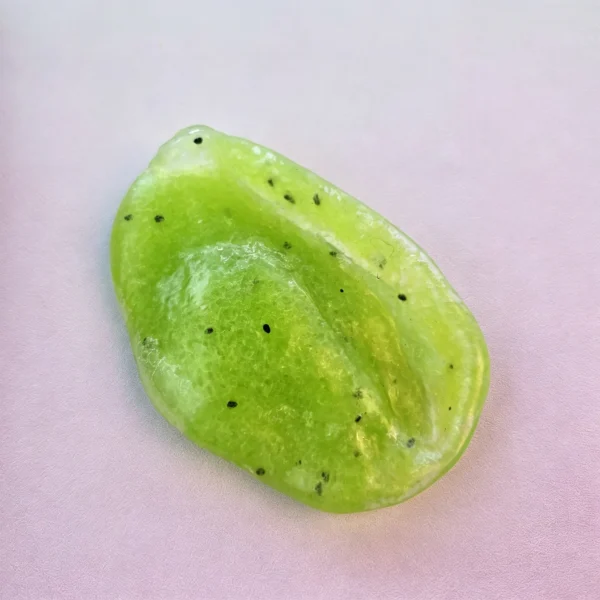
Slushy examples
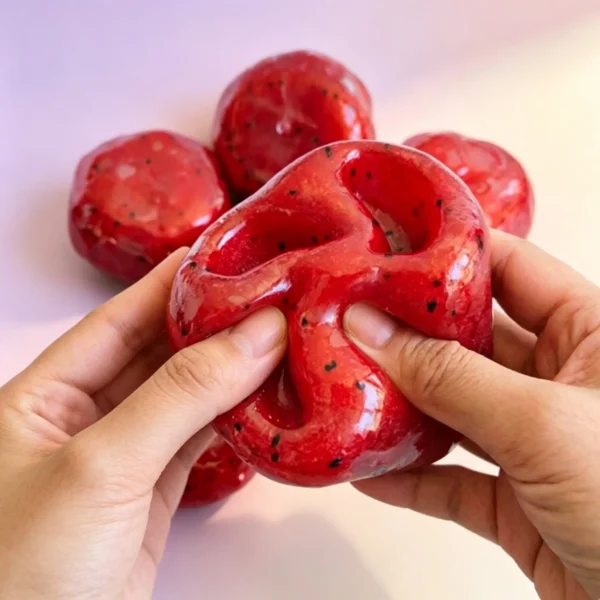
Crunchy examples
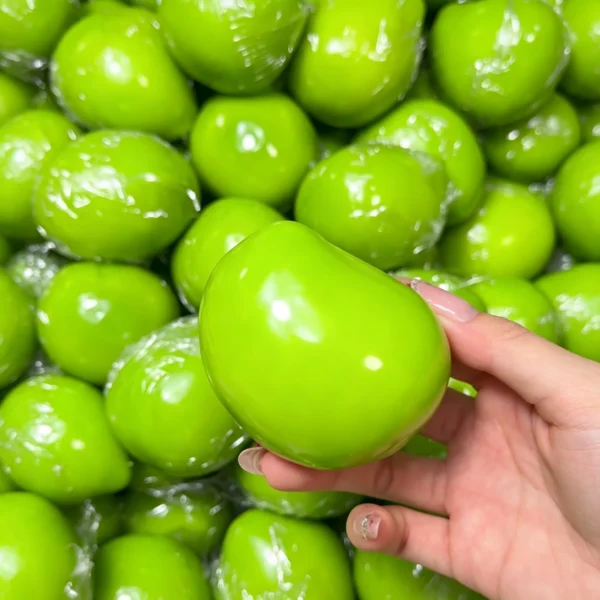
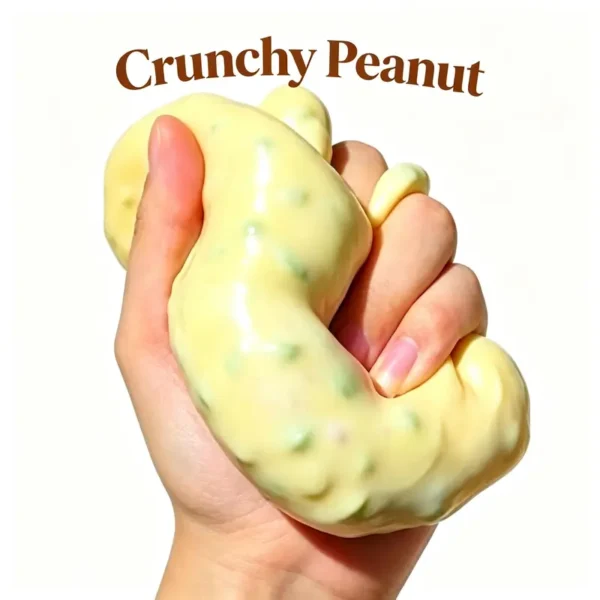
Availability, pack options, and product details can change. Recheck the individual product page before making a decision.
Care and warning signs
Follow the instructions for the exact product rather than applying one cleaning method to every filled squishy. Keep the surface and plug away from sharp objects, and avoid pulling or twisting beyond the use shown by the seller. If a product is intended for a child, follow its current age guidance and supervision instructions; an age shown on one listing does not automatically apply to another toy.
Stop using a squishy that leaks, tears easily, develops an unusual oily surface, becomes unusually sticky, or has a strong chemical odor. The CPSC’s August 2026 squishy-toy safety alert also warns against microwaving or intentionally heating squishies and against leaving them in hot cars or other hot environments.
Discarding or reporting a damaged product is a safety decision, not a texture preference. Do not cut open a filled toy to identify its contents or copy its construction.
A simple decision checklist
- Choose the movement: flowing and grainy points toward slushy; distinct pieces and pressure points toward crunchy.
- Choose the resistance: look for a full-hand demonstration and stated dimensions instead of relying on “soft” or “firm” alone.
- Choose the sound: compare normal-room audio, not only close-microphone ASMR.
- Check recovery: watch the complete release and second squeeze.
- Verify the exact listing: match the demonstrated shape, color, size, pack, and construction.
- Inspect care and warnings: use product-specific instructions and stop at leakage or deterioration.
If neither side clearly matches what you want, return to the broader dimensions—resistance, movement, sound, and rebound—rather than forcing a choice between two labels.
Frequently asked questions
Are slushy squishies softer than crunchy squishies?
Often, but not always. Slushy products are commonly described as pliable or moldable, while crunchy products are often described as firm or resistant. Shell thickness, filling, fill level, size, and temperature can reverse that expectation, so compare the exact products.
Do slushy squishies contain real sand?
The word “sandy” can describe a sensation or sound without identifying an ingredient. Use the manufacturer or seller’s actual material disclosure; do not infer composition from a video.
Why does a crunchy squishy sound louder in a video?
A close microphone, quiet room, boosted audio, surface contact, or editing can amplify the sound. Look for normal-distance, unedited demonstrations with the product and hands visible.
Which type holds its shape longer?
That depends on the shell and filling, not the category name alone. Some slushy products stay flattened, while others recover quickly. Crunchy products can also vary as their internal pieces redistribute.
Which one should a first-time buyer choose?
Start with the movement you want. Choose slushy for flowing, fine-grain manipulation; choose crunchy for firmer resistance and more distinct internal texture. Buy one well-documented example before assuming an entire category suits you.